Thursday, March 5, 2015

When can I stop using treats?

We get this question pretty frequently in our classes and it is a really great one to ask. We all want to have our dogs listen to us regardless of the status of the chicken in our pockets!

Before I get to answering the exact question at hand, first I have one of my own to ask. How long would you continue to go to your job if they stopped paying you? A few days? Probably. A week? Less likely. Forever? No way! Even if you’d been reliably working for MANY years.

What if your job was new and you were still sometimes struggling to figure out what they wanted you to do? You’d probably quit even quicker.

We all have things in our lives we’d rather be doing than going to work. Even those of us who love our jobs, won’t do them forever if we aren’t being paid.

Does this mean you are forever destined to having treat crumbs in your pockets? Absolutely not! This is because there are things in your dog’s life that he wants just as much (if not more than) as a food treat. We just happen to use food in our training because it is the easiest to control and deliver quickly.

For example, when teaching wait at the door, we never use treats because we don’t need them. Allowing the dog to walk through the door to the outside is its own, real-life, reinforcer for the behavior of waiting politely at the door.

In psychology, there is something known as the Premack principle which states that more probable behaviors will reinforce less probable behaviors. It’s a fancy way of stating the “dessert rule” where kids only get dessert if they eat their dinner. You reinforce the eating of dinner (less likely) with the eating of dessert (more likely).

In dog training, we use the Premack principle to fade away our treats. We all know things dogs are likely to do: chase squirrels, sniff grass, play ball, etc. and we can use all of these things as non-food reinforcers for behaviors. For example: ask your dog to sit, then tell him to “go sniff” that fire hydrant. Or he can offer nice eye contact for the chance to chase a tennis ball. The opportunities are endless. Now you can keep paying your dog without having to have a pocket full of cookies!

There are many different, more advanced, ways to start fading away your treats, this is simply one of our favorites. If you want to know more, be sure to ask.

Thursday, February 5, 2015

Cats+Dogs=Fun??

Living peacefully with dogs and cats can be hard work! Here are a few tips to help your fuzzy critters to get along.

  1. Management: The more your dog chases your cat, the better he gets at chasing your cat. Avoid giving him this opportunity as much as possible. Use baby gates, doors, leashes, and crates to keep the dog and cat separate when not training.
  2. Train Both Animals: It’s easy to remember to train the dog, but we can, and should, train the cat too. Our first step is simply teaching them that having the other around makes good things happen. Give the cat canned food in a large, open location. While the cat is eating, bring the dog just into visual range of the cat. Feed the dog something he LOVES. I like to use canned food for the dog as well since it’s easy to feed quickly and often very high value. Keep feeding the them both for simply existing in the presence of the other. As they become more comfortable, gradually decrease the distance between the two.
  3. Look At That (adapted from Control Unleashed): Teach this skill with a neutral or mildly exciting object first, such as a familiar person. Any time your dog glances in their direction, mark and reward. Add a cue (“look” or “what is it?”) once they are reliably glancing. Then ask the dog to look at the cat, starting from a distance.
  4. Matwork: Teach your dog to lay down and relax on a mat. When you have a relaxed down on the mat, introduce matwork with the cat around. This is a great way to introduce a moving cat (with a second “cat handler”) by having the cat move between canned food locations. Look at that can also be played on the mat during this time.
  5. Cat Safe Place: Make sure your cat has a safe, dog free place. This should ideally be a completely dog-free area. The kitchen, a basement or a bedroom work great. Make sure your cat has plenty of high places to sleep and eat.
  6. Train With and Without Barriers: Make sure the dog and cat are comfortable not only when they can directly see each other, but also when behind barriers such as baby gates.
  7. Desensitize to Cat Noises: Make sure your dog is comfortable with not only seeing the cat but also hearing him. Use YouTube videos to teach your dog that cat noises mean the arrival of delicious treats.
  8. Teach an Emergency Recall: Management always fails, and when it does you want to be ready. A good recall will allow you to call your dog away from the cat and prevent disaster.
  9. Remove the Leash: You should only consider progressing to off-leash practice when your dog is extremely reliable with everything on-leash. Start with the leash dropped, and then progress to off-leash.
  10. Patience: Getting a cat and dog to get along can take time! Rushing will only make the process take longer. Some dogs and cats will be fine together in hours, others might take months.

Remember, positive reinforcement builds relationships! My older dog, Caleb absolutely hated cats. He couldn’t look at them or even smell them without barking and growling. Then Abigail adopted Mike, a 5 week old hit by car kitten slug who was a dog trainer’s dream. At first, he spent all of his time in a crate or being held. He couldn’t stand, forget walk.  He gradually became more mobile but allowed for lots of time to train Caleb while he did so. Mike LOVED dogs (he grew up with dog trainers, what would you expect?) so he made my job easy.  Caleb eventually got to the point where both he and Mike could peacefully exist loose in the house. Then something happened that could only happen with positive reinforcement training: Caleb and Mike played. Yes, played :)

A New Year’s Resolution You Can’t Afford to Give Up

With the start of the new year, it’s the time for resolutions and we here at Adventure Unleashed have an important one we’d like to recommend.  Given our job you’d expect it’d be something along the lines of “train your dog for 5 minutes every day” or “take your dog for a long walk at least once a week” but while these are important things to work towards, there’s something even MORE important for you and your dog.

It’s appropriate financial management and having a savings account for pet emergencies.

That’s not what you were expecting was it? Let me tell you a true story to explain why we think this is so important. Roughly three months ago I (a veterinarian) saved a 4.5 week old kitten who had been hit by a car and had a skull fracture. He was in really rough shape and I didn’t expect him to live through the night though given the nature of his injuries I told him I felt obligated to make an attempt. But I wasn’t going to put much money into a stray feral kitten. Somehow, after getting roughly no sleep for days, he managed to pull through and was adopted into the family with the name Mike “Dinner” Wazowski. He lived with me for 8 weeks, quickly becoming a fixture in both the house, and as a helper in dog classes.
 

Unfortunately, one day I came home to find Mike lethargic, painful, and having vomited. Being a vet, I quickly thought of all the terrible things that could be wrong, and made the decision to take him to the emergency vet. It was unclear exactly what was wrong, and his history of brain trauma made it even more difficult to diagnose. I was left with the tough decision to either hospitalize him for further testing and potential surgery or euthanize him. The first option was likely to be very expensive and being a dog trainer doesn’t make you a lot of money. He wasn’t in bad shape and I wanted to be sure that I had given him the best chance of survival. If we could find out what was wrong, and fix it then I’d have 15-20 good years with the best cat ever. But the question “can we actually afford this” came up. Which is the worst reality of being both a vet and a pet owner. Sometimes you can’t afford to give your pet the care he needs without sacrificing your family’s life. That’s just reality.

Luckily for Mike, I have a savings account that is just for emergencies. I worked four different jobs after graduating and was very careful with my spending to make this the case. On a day to day basis, I try to forget about this money. This is what allowed me to make the decision to hospitalize Mike. They ran a lot of tests, came up with a potential answer that could be cured with surgery, we did that, but he never recovered the way he should have. There was something bigger going on that we couldn’t figure out. Five days after I hospitalized him, Mike began to have trouble breathing and it was the end of the road for him. Yeah, the story doesn’t have a happy ending.

So, do I regret having that savings account, and spending all that money on him? Not. At. All.

Having the ability to treat Mike (without risking my own financial stability) until it was clear he was suffering and we still didn’t know what was going on allowed me to know for sure that we had done everything medically possible for him. It’s what ensures I can sleep at night without worrying “what if.” It’s how every pet and owner should part; with the peace of knowing they made the right choice.

So, over the next year, make it your goal to have an emergency fund. You’ll be working alongside me as I rebuild mine. By making this a priority, you can ensure that you are prepared for whatever life throws at you. Your pets (and your vet) will thank you for it. How much should be in it? For a personal savings account, the general recommendation is ~6 months of expenses, but what about for pet expenses? That’s up to you. Talk to your veterinarian about how much she recommends you have based on your pet and your lifestyle, she’ll be happy to know you are attempting to be a more responsible pet owner!

Friday, January 9, 2015

5 Great Reasons to Crate Train

1. To housetrain. The easiest, surest way to housetrain your pup is with a well-sized crate. A crate with a divider for large dogs is perfect for puppy's space to grow with him.

2. To give your dog a safe space. Sometimes our household gets stressful for even the most stable dog, and a crate is something that's just his and stays the same no matter what! If you're moving homes, hosting houseguests, going to a dog sports trial, or even just going to a hotel, your dog has his own "room" that he feels safe and relaxed inside.

3. To protect your dog from himself. Even good dogs have bad days. My personal favorite example is my old doberman, Dazz. The best dog ever, loose in the house since she was 2 years old and housebroken, at 13 started needed prednisone. Pred is a steroid and stimulates appetite. You can imagine the destruction a dog can wreak on an apartment in 6 hours when they're absolutely convinced they are starving. She found things even I didn't expect were edible (or even palatable!) Always remember, your dog might be an angel, but even good dogs may have to go on appetite-stimulating drugs!

4. To make the vet less stressful. If this is the only reason you decide to maintain a crate behavior, this will be worth it. In case your dog has to stay overnight at the vet for some reason, being used to a crate will make it way less stressful. There are many other reasons that would require your dog being crated besides the vet, as well - flights and quarantine if you're traveling internationally, evacuations in the event of an emergency, boarding in a kennel etc. Some of these may be worst-case scenarios, but a well-trained crate behavior will make the ordeal much easier on your dog.

5. To train other things. A crate can be a fun exercise to teach behaviors! A few examples: sending your dog into his crate at speed from anywhere in the house, waiting with the door open until you give him the release word, even a good retrieve his toys into his crate. Have fun with crate training!

Friday, October 10, 2014

5 Tips for Surviving Halloween With Your Dog

Halloween is quickly approaching us, and it can be one of the most difficult and scary times for dogs. Here are 5 simple ways you can help prepare your dog for the upcoming holiday.

  1. Costumes and Decorations - Halloween comes with a variety of things that dogs can find scary (regardless of if we INTEND them to be scary!) Spend some time leading up to the holiday preparing your dog for what he might encounter. Teach your dog that decorations and people wearing costumes mean great things happen to him by pairing them with delicious treats or his favorite game. Start with less scary things, such as a pumpkin by the door, or a new hat as a costume and gradually build up to more terrifying things. Such as an Abigail in a mask, wig, boots, and cape...

  1. Waits at Door - When trick or treaters come to your door, you don’t want to have to be playing the “block the opening” game with your dog while trying to deliver candy to young guests. Teach your dog to wait politely until you tell him he is allowed to go through the door. We go over how to teach this in detail in most of our classes, but the short description is to start by opening the door a tiny crack. If your dog doesn’t attempt to go through the door, give your release word, open the door the rest of the way, and have a party on the other side. If he tries to get through the door, it simply closes and you try again. Over time, you will be able to open the door further and further while your dog waits politely for your release word.

  1. Leave it - Candy is tempting for everyone, but it can be especially dangerous for our canine companions. Candy often contains chocolate, lots of sugar, and high fat content. All of which can be dangerous for dogs. Spend some time proofing your dog’s leave it to ensure your dog (and your candy stash!) remains safe.

  1. Kids - Kids love halloween, but not all dogs love kids (especially when they are wearing costumes). Ensure that you know how your dog will react around your smallest trick or treaters and that you have the management skills to handle his reaction. If possible, find some polite, well-behaved children who can help you to teach your dog to be calm and relaxed around children before they start arriving at your door demanding treats!

  1. Crates and Management - Thinking you might have a lot of work to do and not enough time in which to accomplish it? Then this last tip is for you! The simplest and easiest way to manage your dog is to use your crate when you can’t ensure that your dog is going to behave appropriately. Teach your dog to love going into his crate and how to relax with a delicious food toy. This way, if you know your dog won’t be able to handle a situation, you have an easy way to make sure everyone stays safe and happy!

Friday, May 9, 2014

Dog Parkour Benefits

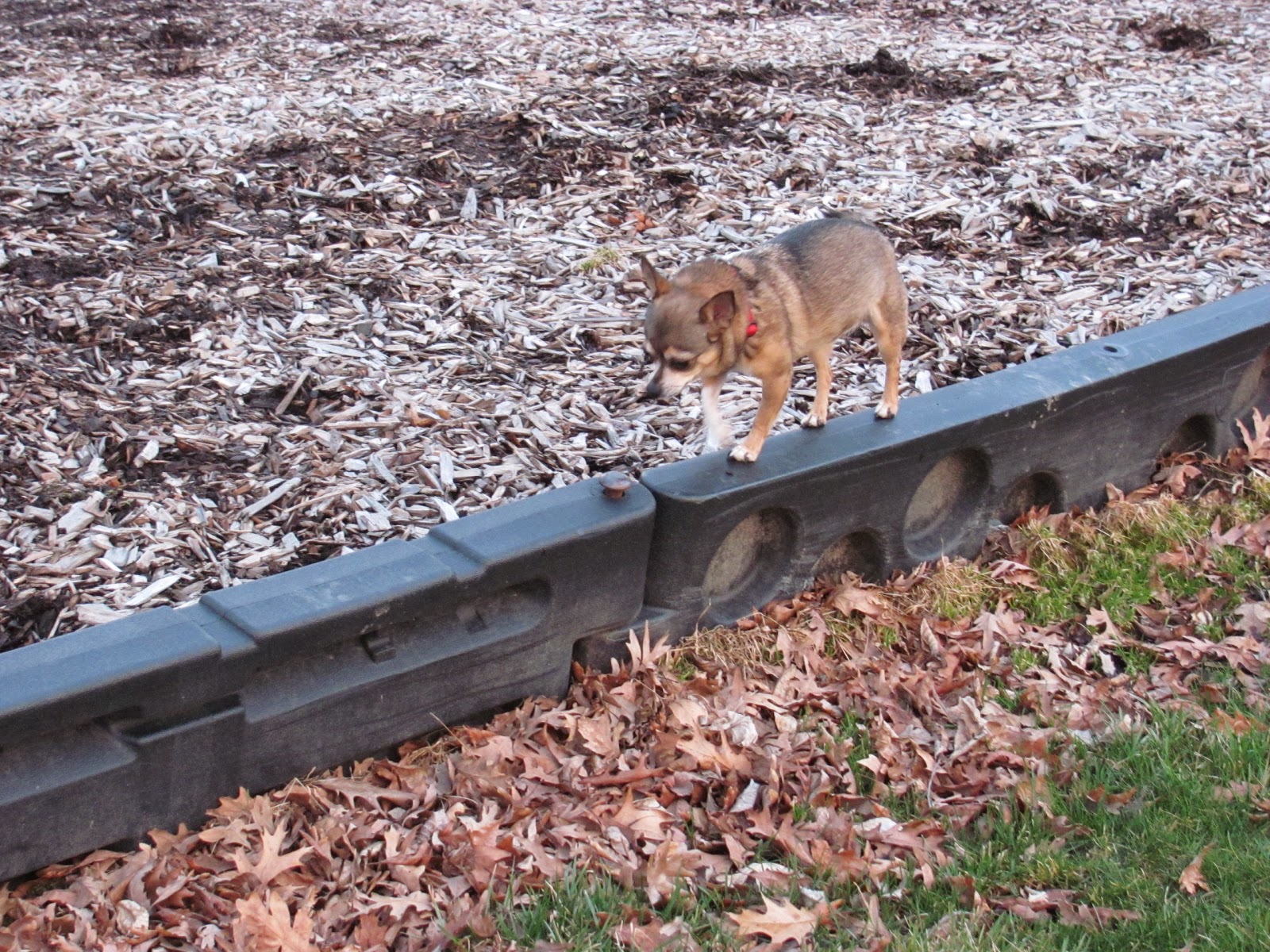
We just finished our sixth week of outdoor dog parkour classes and are incredibly impressed by the progress all of the dogs have make.  We have seen a lot of other benefits as well. Here are some benefits of dog parkour, with cute pictures of course.


Physically and Mentally Demanding
Sports Foundation


Increased Coordination

Increased Focus

Increased confidence

Increased Strength

Adjustable for dogs of all ages


Improvement of Behavior Problems

Improvement of Obedience Skills


Individually tailored


Increased Problem Solving Skills
FUN!!!!!!


Tuesday, April 8, 2014

Puppy Socialization!

Here at Adventure Unleashed we are HUGE proponents of socialization of puppies. Which is amusing when you consider that nearly all of our dogs have come to us as adults from rescue. We like to think that we have seen the impact of LACK of socialization and thus want to do everything in our power to ensure that EVERY puppy has the benefit of appropriate socialization before it is too late.


During what scientist call the “socialization window” puppies will quickly and easily learn new things about their environment (whether that be positive or negative associations) and will then hold onto these associations throughout their entire lives. The socialization window in domesticated dogs closes at 16 weeks of age. Once this window is closed, we can no longer socialize a dog, but rather have to use the SIGNIFICANTLY less powerful tools of desensitization and counterconditioning to change a dog’s response to their environment. Thus, it is critically important to your puppy’s long term development that you take socialization seriously (while still having FUN!)


Here are five things to be SURE your puppy is introduced to before reaching 16 weeks of age:


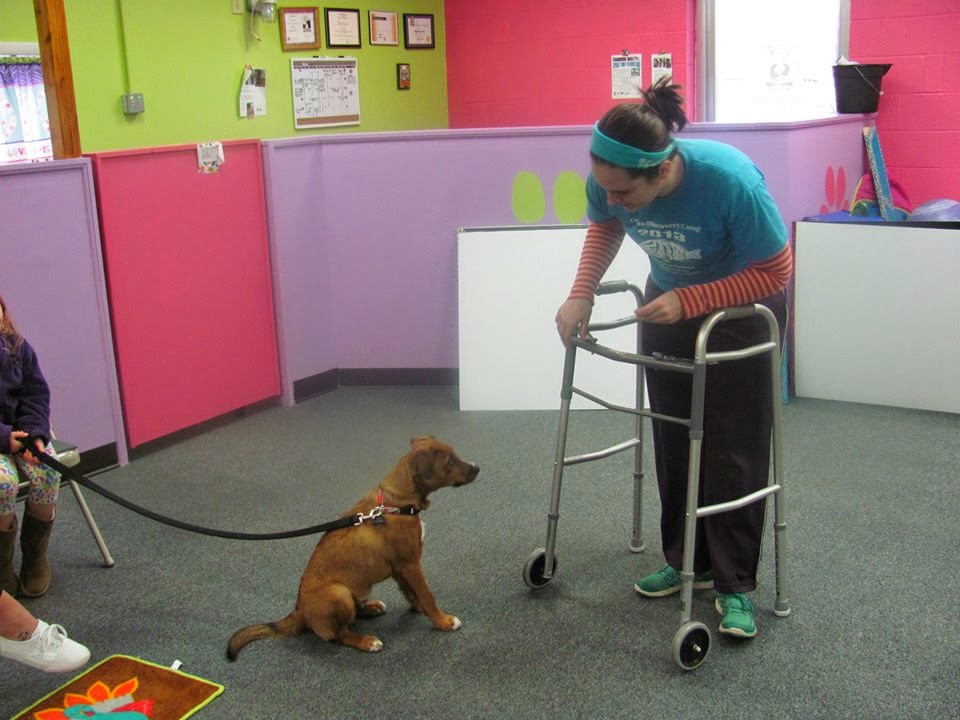
People-  Introduce puppies to things they will see as adults. Make sure they meet people with hats and beards, people using walkers, on scooters, wheelchairs, crutches, kids, strollers, bikes, skateboards and anything else your dog might come across as an adult. Make sure every interaction is positive and on your puppy’s terms; i.e. let your puppy decide to approach the crazy person with a giant hat on, and give him a treat for being so brave! The puppy should learn how to work with his person, and that people make good things happen. Also, for the more enthusiastic puppy, proper greeting behaviors are helpful to learn when small. When your puppy jumps all over someone, have the person ignore him until he sits (or at least has all four paws on the ground) before giving him attention. This is also a great introduction to self control for puppies.


Handling- Teach your puppy to be comfortable with his paws, teeth, ears, and tail being handled, both by his owner and friendly strangers such as your veterinarian. Do this by feeding your puppy delicious treats while handling these areas and moving ONLY as quickly as your puppy is comfortable. If at any time your puppy pulls away, go back to an easier touch (try touching a leg instead of a foot, etc) and gradually build back up to the harder one.


Environment- Teach puppies how to deal with new and unexpected objects and how to work through environmental changes- that just because something is new or different doesn’t make it scary or stressful for your puppy. Work on these skills by teaching puppies to climb on objects, go inside, through, and under them, and balancing on or around them. Interacting with objects builds confidence as well as a foundation for the puppy’s learning skills. Puppies should also safely visit a variety of different dog friendly places, walk over different surfaces, and interact with things that might scare them as adults, such as statues, busy roads, and crowded sidewalks. As always, pay attention to your puppy and make sure everything is a positive experience. If you do move too fast and make your puppy uncomfortable, start over again with fun things and lots of treats.


Dogs and other animals- Puppies should learn to both work with other dogs around, and howto play appropriately with other dogs. Start by asking for a sit (after your puppy knows sit!) when another dog is within sight, but far enough away that your puppy can focus on you. You can work on shortening that distance to build up your puppy’s ability to sit with a giant distraction (another dog) around. Play is important for proper social development, and encourages the puppy to develop proper bite inhibition. Be sure to carefully screen your puppy’s playmates to be sure they play how you want YOUR puppy to play in the future. Puppies should also be introduced to any animals they might come into contact with later in life, such as cats, horses, birds and small animals.
Noises- Puppies should have positive experiences with all sorts of sounds, such as traffic, fireworks, thunderstorms, kids screaming and vacuum cleaners. Be sure to expose them to activity appropriate noises. Field Dogs should hear gunshots at a young age, agility dogs should be exposed to noises that come with trials. Start with quiet noises, and gradually introduce louder ones. It is okay for the puppy should notice the sound, but they should immediately return to whatever they were doing. If they don’t re-engage, back away or do not recover quickly from the noise the noise was too much. Start with a quieter noise and keep it fun!


Socializing a puppy is a lot of work! With just these 5 things, you’ll be busy for quite a while. However, there are a lot of other benefits (we’ll call them side effects) of socialization. Starting with the obvious: new things are good things to a puppy! You’ve worked on introducing half the world to your puppy, and hopefully by the end of it, he not only learns that the things he interacted with are fun, but that new things he hasn’t yet seen will fall into that category as well simply because he’s seen so many things. He’s also learning to work with you; that doing things (sitting, looking at you, etc) can earn him treats.

And guess what else? YOU are also learning! You’re learning how to read your puppy - when does he get frustrated? How can you tell that you’re about to lose his focus? What can you do to mitigate that? What can you do to make your puppy feel comfortable in any situation? You’re learning your dog’s thresholds - for frustration, stress, etc. As you work with him and he matures, they will change, but it’s good to know your starting point. Keep this stuff in mind, too, as you socialize your puppy and learn what he’s like!

Friday, April 4, 2014

Dog Parkour Safety

It is our favorite time of the year again, Outdoor Dog Parkour time! Like any sport or activity Dog Parkour has its risks. These risks can be minimized by following a few basics guidelines.

Harnesses: Proper equipment is key! All dogs in our outdoor classes wear harness that clip on the back. Harnesses help people spot their dog, but they also mean that if a dog ever slips the pressure from the leash is spread throughout the dog’s body instead of just their neck.

Spotting: Always be ready to catch or assist your dog! Before you teach your dog any parkour skills teach him to be comfortable being handled, picked up and helped.

Shoulder Height Rule: Dogs should only be jumping down from objects as high as their shoulders. This is ESPECIALLY important on concrete! Jumping down is a lot of impact on the dogs body and can lead to injuries. Before you ask your dog to jump up on something more than shoulder height, make sure they have a safe way to get down. This may be a shorter drop elsewhere, or you picking him up. Dogs with long backs, young or old dogs, or dogs with predisposition for musculoskeletal injuries should be limited to even smaller drops.


Weather: This isn’t often a huge concern in the spring (although the rain does make surfaces extra slippery) but as the weather starts to warm into summer, be conscious of the heat and sun. Be sure your dog (and you!) remain well hydrated and remember that black or shiny surfaces get hotter MUCH faster than others. If the surface is too hot for you to walk on without shoes, it’s too hot for your dog.

Inspecting obstacles: It is your job to keep your dog safe! Before you ask your dog to do anything, check to make sure it is safe. Look for rust, nails, sharp edges, broken objects, glass or anything that may hurt your dog. Make sure the object you are asking your dog to interact with is sturdy and safe.

Let your Dog Choose: Parkour should ALWAYS be your dogs choice. Encourage your dog, but never force him to do anything. As your dog gets more confident with parkour be sure to teach and allow “intelligent disobedience”. The best trained dog is the one that does everything you ask within his physical limits. Any time your dog evaluates an obstacle and decides he can’t perform it, be sure to reinforce that decision. If you truly believe that it is close to your dog’s limits, come back to the obstacle at a later time and you might find that your dog’s confidence has increased.

With these tips in mind, you and your dog are on your way to SAFELY enjoying outdoor parkour!

Friday, March 14, 2014

Almost Spring!! Dog Parkour Preview

Here at Adventure Unleashed, we are extremely excited that it is almost spring! Spring means more hiking, backpacking trips, outdoor play and perhaps most excitingly, Outdoor Dog Parkour is back!! We decided to celebrate the first hint of nice weather with our Outdoor Dog Parkour Preview, a free class designed to show dogs and humans what Dog Parkour is all about. The dogs learned all about balancing, climbing, going through and under objects and most importantly, working with and having fun with their owners!

Sky practicing balancing and turning on the wall.

Allie climbing between two benches
Ruthie being extremely brave.
Parkour can build confidence in shy and fearful dogs!
Agnes practicing going under.
Brindley weaving through the bike racks.
Magnum balancing on a very tricky rock wall.


Carlos practicing sits on strange surfaces (Remember Carlos!? He was one of our dogs from our shelter workshop)


                          Puppy Parkour graduate, Lucy
                 practicing walking on strange surfaces.

Monday, February 17, 2014

Slip-sliding time!

With it being winter you probably think I am going to write about how you should teach your dog to walk nicely on a leash so that you don’t slip and fall down. Well, you should know a secret about Adventure Unleashed’s dogs. We don’t CARE about teaching our dogs to walk nicely on a leash. We can (and our old, responsible dogs have accidentally learned not to pull unless they are on a harness) but think there are more important things to learn first. Like how to jump and balance on a tiny post or walk across a tiny tree over a river.


So what might I be writing about with that title?


It’s something we have been contemplating, discussing, recontemplating and then rediscussing for a few months over here at Adventure Unleashed.


Let’s start with a story.


When we first started teaching indoor class, we would find an AWESOME new toy at the store, buy it, and our dogs would play on it (ahem, I mean TEST it). Then, we would excitedly introduce the toy in class, only to have people mildly disappointed that their dogs were slipping on the toy. So we started putting grippy things on EVERYTHING. It became our thing. We were experts at cutting the grippy stuff into JUST the right shape and convincing the duct tape to bend to our will around crazy corners.


And we were happy with how much more confident our beginner dogs were to try the objects once it was a grippy surface. But something was missing. We started thinking back to when we first brought the toys home and our dogs would happily play on them with no trouble. What was different about OUR dogs than the dogs at class? Why would they play on these toys when even our more advanced dogs had trouble?


After a decent amount of discussion we figured out that it was because our dogs had learned how to avoid slipping as much as possible and how to recover when they do begin to slip. Suddenly, we had yet another unusual skill that we accidentally taught our dogs and now needed to teach the dogs in class.


Learning to be steady on slippery surfaces seems to be a combination of several skills. First, it requires a good deal of core strength. The dogs need to be able to hold each of their limbs close to their body without bracing them against a sticky surface. You’ve probably seen (and chuckled at) the dog who sits on a tile floor and his front feet start to slide out until he is in a down. A dog with enough core strength to hold his front legs in the proper position won’t have this problem.


Second, the dog needs to be comfortable with falling and being spotted. The fastest way to have a problem slipping is for the dog to begin to get worried about their footing. When this happens, most dog’s first reactions are to dig in with their claws and begin to move in more frantic ways. We noticed when watching our dogs that when they began to slip, they moved in very predictable ways, shifting their weight to more stable feet, in an attempt to correct this. We never saw them attempt to dig in with their nails and if they couldn’t stop the slipping, they simply got off in a controlled manner (what we like to refer to as a controlled bail). By knowing how to shift weight, and how to bail safely, our dogs are able to safely handle the demands of a slippery surface.


We have now started systematically adding slippery surfaces into our classes as dogs become more advanced. We start with textured but slightly slippery surfaces on a low, wide object and progress to higher, smaller, and more slippery surfaces.


Being able to adapt quickly to changing surfaces makes our parkour dogs more resistant to injury and better able to maintain mobility as they age. Since the dogs know where their body is in space, how it moves, how to adapt to sliding, and how to “bail” safely, they become better athletes who are able to maintain a high quality of movement for as long as possible.


So what are your waiting for? Start giving your dog the benefits of “slide training” today!


Monday, February 3, 2014

6 Essential Skills to Teach Your Dog Before Heading on a Backpacking Trip


A backpacking trip with your four legged friend can be a lot of fun, but it can also be a disaster waiting to happen if you aren’t prepared. Teach your dog these six essential skills to ensure you have the best possible experience in the backcountry.
Wait
A good wait is an extremely versatile cue and is essential to having a safe and fun trip. The “wait cue” should mean stop right where you are and do not move until I tell you to. This behavior allows you to safely navigate a slippery or dangerous obstacle while your dog waits patiently on the other site. It is also prevents your dog from bothering others on the trail, and can be used to allow safe exiting and entering of the tent without the dog bolting. Crate games are an excellent way to teach a wait! If you are unfamiliar with crate games, Susan Garrett has excellent information, as well as a DVD about the topic. Practice having your dog wait before leaving the crate, on stairs, and at doors in your house.

Recall
All dogs should learn to come when they are called! In the woods this skill becomes even more important. If the leash is dropped accidentally or breaks it is important to know that your dog will come back to you. There are also circumstances when it is unsafe to navigate the terrain with your dog on-leash. A good recall means you can take your dog off-leash, navigate the terrain, and then call your dog back to you. Please follow the leash laws of the area where you are backpacking.

Reinforce your dog every time he comes back to you! A whistle recall is extremely helpful in the woods. It’s a unique sound that you can ensure is always associated with good things and can be easily heard in the woods. Start in a place with minimal distractions, blow the whistle, and give your dog a treat. Your dog will quickly begin to run to you every time you blow the whistle. Gradually increase the distance and level of distraction until your dog will run to you through the resident herd of squirrels. Remember to ALWAYS pay your dog well for coming back with delicious treats or his favorite game.

Navigate Difficult Terrain
Teach your dog to navigate any terrain you may come across before the trip. Research the area and figure out what types of terrain you are likely to see. Dogs should be comfortable crossing streams, climbing over and balancing on rocks and logs, walking through mud, and walking through areas where brush may rub against them.  

Train your dog to be comfortable with walking over unfamiliar surfaces and things that move. Start easy, reinforce your dog with a treat every time he walks over a tarp, grate on the sidewalk, or strange surfaced floor. Progress to climbing on benches, walking across walls and going under rails; dog parkour, also known as urban agility, is a great way to teach these skills! The more strange objects your dog is comfortable interacting with, the better off you will be on the trail. Go to the local park and find some streams, logs, and rocks to play on. Keep sessions fun, and always let your dog choose to interact with the objects.

Mat or Tethering Behavior 
Having a dog that will wait patiently for you to take care of the multitudes of things you will need to do while backpacking can be a serious help on the trail. For one thing, it means you won’t have canine “assistance” in meal preparation and consumption or shelter building (their lack of thumbs makes setting up the tent tricky). It also means that when you stop to take a break, your dog isn’t wasting energy chasing down dinner. Even the most energetic dog will start to get tired a few days into a trip and being tired increases the risk of injury dramatically.

Teach your dog to relax comfortably in a down on a mat. The crate games referenced earlier are an excellent way to teach this behavior as well. Simply use a mat instead of a crate. Mats can be made from anything, ideally something you were already bringing on the trip such as a sweatshirt or sleeping pad. Also, use the crate games to teach your dog to relax when you tether him to an object such as a tree or large rock. This way you can be sure your dog is relaxed and won’t accidentally wander off when you are concentrating on boiling that water just so.

Drinking and Eating On Strange Surfaces And Places
When backpacking, it isn’t often that you will want to pack your dog’s water and food bowl as well as carry all the water he will need for the trip. This is just extra weight that you can reduce through some simple training. Once your dog is used to eating and drinking out of a variety of surfaces, you will find you have a plethora of bowls limited only by your imagination. This can include: cups, plastic bags, rocks, collapsible bowls, etc.

This skill isn’t difficult for many dogs to figure out, but it is something you will want to practice before heading on your trip. Start by moving your dog’s normal bowl to different places around the house and yard. Examples include: on the couch, on the stairs, or in the backyard with the neighborhood squirrel. Do the same with the waterbowl including adding some water from a different place such as a jug you filled up from work. Once your dog will reliably do this, get creative with the bowls. Use a plate, a cup, or a grocery bag molded into a marginally bowl-like shape. If you know what you will be using as a bowl on your trip, be sure to practice with that. Eventually your dog will be unfazed if you ask him to eat his dinner off of that bowl shaped rock on the hillside while drinking out of the bag you are pretending is a bowl.

Handling and Picking Up
Your dog should be comfortable being picked up and carried short distances as well as being touched on all body parts. While we would like to convince ourselves that nothing could ever possibly go wrong in the backcountry, the reality is that things can, and do, go wrong. We can best be prepared for these bad things by planning ahead. This way, if something happens to your dog while hiking, you can carry him out, or at least get a good look at that cut on his foot.

For this skill, it is often easiest to have a helper assist you. Start with areas your dog is already comfortable with you touching (such as a shoulder) and pair that with a treat. Gradually move to areas that your dog is less comfortable with (such as feet). If your dog pulls away, let go and move to an easier area. Continue this process until you can get a good look at all parts of your dog. Now that your dog is comfortable with touching slowly begin wrapping your arms around your dog as you would to pick him up. Just like with the touching, only go as fast as your dog is comfortable. Gradually build up to picking your dog up and moving short distances. Remember to always pair this activity with a delicious treat.

Having mastered all of these skills, you and your dog are now well on your way to enjoying your next adventure. Go outside and have a blast!